Home / Blog / Deodorants / How sustainable is bioplastic deodorant packaging?
How sustainable is bioplastic deodorant packaging?
Chemical reviewed by Eric
Written by the Rebel.Care Editorial Team
Last updated 26/12/2025
Bioplastic deodorant packaging offers environmental benefits over traditional petroleum-based plastics, but its sustainability depends heavily on disposal conditions and infrastructure. Most bioplastics require industrial composting facilities to break down properly, and they won’t simply decompose in your bin or the ocean. However, when you combine bioplastic packaging with refillable deodorant systems, you create a much more sustainable solution that reduces waste at the source whilst still offering eco-friendly materials for what packaging remains.
What exactly is bioplastic and how does it differ from regular plastic?
Bioplastic is plastic made from renewable plant-based materials like sugarcane, corn starch, or cassava, rather than petroleum. The manufacturing process converts these plant materials into polymers that function similarly to conventional plastics. The fundamental difference lies in the source material, though both types of plastic share similar structural properties once produced.
Regular plastic comes from fossil fuels extracted from the ground. It’s been around for decades and we’ve built entire manufacturing systems around it. Bioplastic uses crops that can be regrown each season, which sounds better on paper. But here’s the thing: just because it’s plant-based doesn’t automatically make it perfect.
The production of bioplastics still requires energy, water, and agricultural land. Some bioplastics are biodegradable, whilst others are simply bio-based but behave exactly like regular plastic. For deodorant packaging, most brands use bio-based plastics that offer the durability needed to protect the product whilst reducing reliance on petroleum.
You’ll find bioplastic deodorant containers that look and feel identical to conventional plastic ones. That’s intentional. The material needs to withstand moisture, temperature changes, and daily handling without breaking down prematurely.
Does bioplastic deodorant packaging actually break down in nature?
Most bioplastic deodorant packaging won’t break down in your garden or the ocean. It requires specific conditions found in industrial composting facilities, where temperatures reach 55-60°C with controlled humidity and microbial activity. Under these conditions, certified biodegradable bioplastics decompose within 12-24 weeks. Without them, they persist similarly to regular plastic.
This is where things get honest. You can’t just toss a bioplastic deodorant container into your home compost bin and expect it to disappear. Home composting systems don’t generate enough heat or maintain the bacterial conditions needed for breakdown. Your bioplastic packaging will sit there looking exactly the same months later.
In landfills, bioplastics face another problem. Without oxygen, they decompose very slowly and can release methane, a greenhouse gas. In oceans or natural environments, they behave much like conventional plastics, persisting for years and potentially harming marine life.
The biodegradation timeframe varies significantly by environment. Industrial composting facilities can break down certified bioplastics in three to six months. Home composting might take several years, if it happens at all. In marine environments or landfills, you’re looking at decades.
This doesn’t mean bioplastic packaging is pointless. It means the infrastructure matters as much as the material itself. If your area has industrial composting facilities that accept bioplastics, brilliant. If not, the environmental benefit is mainly in using renewable resources rather than petroleum.
The certification confusion
Not all bioplastics are created equal. Some are certified compostable according to European standard EN 13432, which guarantees breakdown in industrial facilities. Others are simply bio-based, meaning they come from plants but won’t biodegrade any faster than regular plastic. Check the packaging for certification marks before assuming it’ll break down.
How do refillable deodorant systems reduce environmental impact?
Refillable deodorant systems reduce waste by up to 80% compared to single-use containers. You keep one durable case and replace only the inner deodorant portion, eliminating repeated production and disposal of outer packaging. This approach cuts down on raw material extraction, manufacturing energy, and transportation weight whilst saving you money on each refill purchase.
The maths is straightforward. A typical deodorant container includes an outer case, inner mechanism, and cap. With refillable systems, you buy the complete package once, then purchase refills that contain just the product and minimal packaging. Over a year of use, that’s roughly four to six fewer complete packages in the bin.
Resource consumption drops significantly with refills. Manufacturing a full deodorant container requires plastic production, assembly of multiple components, and substantial packaging for retail display. Refills need far less material and energy to produce. They’re lighter to transport, which means lower carbon emissions from shipping.
The lifecycle assessment shows clear advantages. A refillable deodorant case designed for durability might use slightly more material initially, but it’s amortised over years of use. After just three refills, you’ve typically offset the initial resource investment. Continue using it for a year or two, and the environmental savings become substantial.
Whether you’re looking for sustainable deodorant packaging options, refillable systems offer practical waste reduction that you can see and measure in your own routine.
The cost benefit
Refills typically cost 30-40% less than buying a complete new deodorant. You’re not paying for redundant packaging each time. Over a year, that adds up to real savings whilst reducing your environmental footprint. It’s one of those rare situations where the sustainable choice is also the economical one.
Which is more sustainable: bioplastic packaging or refillable deodorant options?
Refillable deodorant systems are more sustainable than single-use bioplastic containers in most scenarios. Whilst bioplastic packaging reduces petroleum dependence, refillable options prevent waste creation entirely by reusing durable containers multiple times. The best approach combines both: refillable systems with bioplastic or recyclable materials for the refill portions, minimising both resource extraction and end-of-life disposal challenges.
Let’s compare the full picture. Single-use bioplastic deodorant packaging, even when compostable, still requires manufacturing energy for each container. You need to grow crops, process them into plastic, mould the containers, and transport them. After a few weeks of use, that container needs disposal and ideally industrial composting.
Refillable systems front-load the environmental cost. The initial case requires durable materials and quality manufacturing. But then you’re done with outer packaging for years. Each refill uses minimal materials, and some brands offer refills in compostable packaging, combining the benefits of both approaches.
Transportation impacts favour refillable systems too. Refills are lighter and more compact than complete deodorant packages. You can fit more in a shipping container, reducing the carbon footprint per unit. For online orders, smaller packages mean less cardboard and lower delivery emissions.
End-of-life scenarios present different challenges. Bioplastic containers need proper composting infrastructure to realise their environmental benefits. Without it, they’re just another item in the landfill. Refillable systems avoid this issue by keeping the main container in use, whilst small refill components are easier to manage through existing recycling or composting systems.
The practical sustainability advantage goes to refillable options because they address waste at the source. Prevention beats management every time. You’re not hoping for proper disposal or adequate composting facilities. You’re simply not creating the waste in the first place.
The combined approach
Some brands are getting clever by offering refillable deodorant cases made from recycled plastic, with refills in compostable bioplastic packaging. This hybrid model maximises sustainability across the product lifecycle. You get durability where you need it and biodegradability where it makes sense.
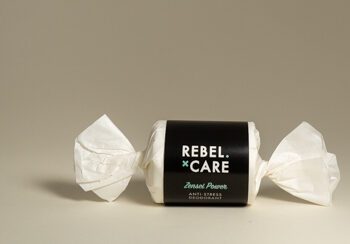
At Rebel.Care, we’ve built our deodorant range around this philosophy. Our bioplastic packaging comes from sugarcane, offering a renewable alternative to petroleum-based plastics. But we’ve also developed a refill programme that lets you reuse your container whilst cutting costs and waste. It’s not about choosing between sustainable materials and sustainable systems. It’s about doing both, because your grooming routine shouldn’t cost the earth.
Frequently Asked Questions
What should I do with my bioplastic deodorant packaging if I don't have access to industrial composting facilities?
Check if your local waste management accepts bioplastics in their composting program first. If not, look for the recycling symbol and material code—some bioplastics can go in regular plastic recycling. As a last resort, general waste is acceptable, knowing that the main environmental benefit in this case is reduced petroleum dependence rather than biodegradability. Consider switching to refillable systems to minimise future packaging waste.
How can I tell if my deodorant packaging is actually compostable or just bio-based?
Look for certification marks like EN 13432 (European standard), ASTM D6400 (US standard), or labels stating 'industrially compostable' on the packaging. Bio-based products will typically say 'made from renewable materials' without mentioning compostability. If the packaging doesn't explicitly state it's compostable with certification, assume it's bio-based only and won't biodegrade faster than regular plastic.
Are refillable deodorant systems hygienic, and how long do the cases typically last?
Yes, refillable systems are hygienic when properly maintained—simply wipe the case with a damp cloth between refills to remove any residue. Quality refillable cases are designed to last 2-5 years or longer with normal use, as they're made from more durable materials than single-use packaging. The refill mechanism clicks securely into place, keeping the product protected just like traditional deodorant containers.
What's the most cost-effective way to switch to sustainable deodorant packaging?
Start by investing in one quality refillable deodorant system, which typically pays for itself after 3-4 refills due to the 30-40% cost savings per refill. Use your current deodorant until it's finished rather than discarding it prematurely. Then purchase refills as needed, and if the brand offers bioplastic or compostable refill packaging, you'll maximise both environmental and economic benefits over time.