Home / Blog / Deodorants / What is the circular economy model for personal care products?
What is the circular economy model for personal care products?
Chemical reviewed by Eric
Written by the Rebel.Care Editorial Team
Last updated 24/12/2025
A circular economy model for personal care products keeps materials in use through refillable systems and sustainable packaging, rather than the traditional buy-use-discard approach. Products like refillable deodorants, body wash, and face wash let you reuse durable containers whilst replacing only the product itself, cutting waste and costs. This system combines bioplastic packaging, refill programs, and regenerative design to create a closed loop where resources circulate continuously instead of ending up in landfills.
What exactly is a circular economy model in personal care?
A circular economy model in personal care replaces the linear take-make-dispose system with continuous resource cycles. You buy a durable container once, then refill it multiple times with minimal packaging. This keeps materials circulating rather than becoming waste after a single use.
Traditional personal care follows a straight line: extract raw materials, manufacture products, use them, throw them away. Every deodorant stick or body wash bottle ends its journey in a bin, even if you recycle it. The circular approach flips this entirely.
Instead of buying a new container each time, you invest in one quality piece that lasts years. When you run out, you purchase refills that use significantly less packaging. The original container stays in your bathroom, doing its job again and again.
This model works across sustainable grooming products from deodorants to face wash. The key is designing containers for durability and refills for minimal waste. Materials flow in loops rather than ending up as rubbish after one round.
What makes this different from just recycling? You’re not sending materials away to be broken down and remade. You’re using the same container repeatedly in its original form, which requires far less energy and resources. That’s the fundamental shift from disposable to reusable systems in zero waste personal care.
How does a refillable deodorant system actually work?
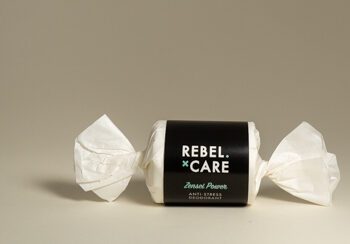
A refillable deodorant system starts with a permanent outer case and replaceable inner cartridges. You buy the case once, then purchase refills that slot directly into it. The mechanism is simple: twist up the product, apply it, and when empty, pop in a new refill whilst keeping the same case.
The outer case is built to last, often made from durable bioplastic or recycled materials. It’s designed for years of daily use, not months. The refills come in minimal packaging, sometimes just compostable wrapping or recyclable cardboard, because they don’t need the structural protection a full product requires.
Using it feels identical to traditional deodorants. You apply the same way, store it the same way, and travel with it the same way. The only difference happens when you run out: instead of binning the whole thing, you remove the empty refill and insert a new one.
The refill cartridges are shaped to fit precisely into the case, usually with a simple twist or click mechanism. No tools needed, no complicated assembly. Most systems let you swap refills in under 30 seconds.
This works for body wash and face wash too. You keep the pump bottle or dispenser and refill it from pouches or concentrated blocks. The principle stays the same: one permanent container, multiple lightweight refills. It integrates into your routine without adding steps or hassle.
Why do refill programs reduce environmental impact more than recycling?
Refill programs reduce environmental impact more because they skip the entire recycling process. When you reuse a container, you avoid the energy-intensive steps of collecting, sorting, melting down, and remanufacturing materials. Refill program benefits include preventing resource extraction before waste even happens.
Recycling sounds good, but it’s resource-heavy. Your empty deodorant goes to a facility, gets sorted by material type, cleaned, shredded or melted, then reformed into new products. Each step consumes energy and water, often powered by fossil fuels. Transportation adds emissions at multiple stages.
Even best-case recycling has limits. Plastic degrades with each cycle, meaning it can only be recycled a few times before becoming unusable. Aluminium does better but still requires significant energy to reprocess. And that’s assuming the item actually gets recycled, which many don’t due to contamination or sorting issues.
Refilling bypasses all this. The container stays intact, doing its original job repeatedly. You’re not breaking down and rebuilding, you’re simply using what already exists. This prevents the manufacturing energy needed for new containers, even recyclable ones.
The resource savings stack up quickly. Manufacturing a new plastic bottle requires crude oil extraction, refining, polymerisation, molding, and shipping. A refill pouch uses a fraction of these materials and processes. Over ten refills, you’ve prevented nine full manufacturing cycles.
Transportation emissions drop too. Refills are lighter and more compact than full products, meaning more fit in each delivery vehicle. This efficiency multiplies across thousands of shipments.
What makes bioplastic packaging different from conventional plastic containers?
Bioplastic packaging comes from renewable plant sources like sugarcane or corn starch, rather than petroleum. These materials can biodegrade under proper conditions and reduce fossil fuel dependency. However, they still need industrial composting facilities to break down properly, they won’t just disappear in your garden.
Conventional plastic is made from crude oil, a non-renewable resource that takes millions of years to form. Once created, it persists in the environment for centuries, breaking into smaller pieces but never truly disappearing. This is the plastic polluting oceans and landfills worldwide.
Bioplastics offer a different starting point. Plants absorb carbon dioxide whilst growing, which partially offsets the emissions from manufacturing. The materials can be regrown annually, unlike finite oil reserves. This makes them part of a shorter, more renewable cycle.
But here’s what matters: not all bioplastics are compostable, and not all compostable plastics are bio-based. Some bioplastics behave like conventional plastic and last just as long. Others break down only in industrial composting facilities with specific heat and moisture conditions.
In circular economy personal care systems, bioplastics work best for durable containers you’ll use repeatedly. A sugarcane-based deodorant case might last years whilst being made from renewable materials. This combines the durability you need with better source materials.
The real advantage comes when bioplastics complement refill systems. You get a renewable-source container that you use dozens of times, paired with minimal-waste refills. That’s where bioplastics prove useful, not as single-use items but as long-lasting components in reusable systems.
How can switching to refillable grooming products save money over time?
Refillable grooming products save money because refills cost less than buying complete new products. You pay more upfront for the initial container, but each subsequent refill runs 20-40% cheaper than purchasing the full product again. Over a year, this adds up to noticeable savings across deodorants, body wash, and face wash.
Let’s break down the numbers. A typical deodorant might cost £8 for the initial container plus product. A refill costs around £5. If you use four deodorants yearly, that’s £8 plus three refills at £5 each, totalling £23. Buying four separate deodorants at £8 each costs £32. You’ve saved £9 annually on one product.
Multiply this across your grooming routine. Body wash, face wash, and deodorant together might save you £20-30 yearly. That’s money you’re not spending on packaging you’ll immediately bin. The savings grow each year you continue the system.
The initial investment feels higher, but you recoup it within months. After that, you’re paying less for each product whilst getting the same quality and quantity. It’s straightforward economics: reusable containers cost more once, disposable ones cost more forever.
Some brands offer subscription discounts on refills, pushing savings even higher. You might get 15% off automatic deliveries, meaning that £5 refill drops to £4.25. These small percentages compound across multiple products and years.
Beyond direct costs, you avoid the hidden expenses of constantly shopping for replacements. Fewer trips to the shop, less time comparing products, reduced decision fatigue. Refill systems simplify your routine whilst lowering your spending on eco-friendly men’s skincare.
The financial case gets stronger when you factor in quality. Many refillable systems use natural, effective formulations that would cost more in traditional packaging. You’re getting premium products at mid-range prices because the brand isn’t spending money on excessive packaging.
At Rebel.Care, we’ve built our entire approach around this circular model. Our natural grooming products come with refillable systems that save you money whilst cutting waste. Whether you’re after deodorants, body wash, or face wash, the refill program means you’re paying less over time for products that actually work. No bullshit, just better grooming that’s easier on your wallet and the planet.
Frequently Asked Questions
How do I get started with a circular economy grooming routine if I'm completely new to refillable products?
Start with one product you use daily, like deodorant, and purchase a refillable system for it. Use it for a month to get comfortable with the refill process, then gradually add other products like body wash or face wash. This phased approach prevents overwhelm and lets you find brands and systems that work for your specific needs before committing fully.
What happens if I lose or damage my refillable container—do I have to buy a whole new system?
Most brands sell replacement cases separately, so you can purchase just the outer container without buying another starter kit. The cost is typically less than the initial purchase since you're only replacing the case, not the product inside. Keep your refills stored safely, and you can simply pop them into the new container when it arrives.
Are refill cartridges compatible across different brands, or am I locked into one company?
Refill cartridges are typically brand-specific due to different sizing and mechanism designs, which means you'll need to stick with the same brand for refills. However, this isn't necessarily a disadvantage—it encourages you to choose quality brands upfront that align with your values and product preferences. Look for companies with reliable refill availability and subscription options to ensure long-term supply.
Can I travel with refillable grooming products, especially on flights with liquid restrictions?
Yes, refillable containers work perfectly for travel and often make it easier since you're carrying the same compact case you use daily. For flights, solid refills like deodorant sticks aren't subject to liquid restrictions, whilst refillable pump bottles for body wash can be partially filled to meet the 100ml limit. Many refillable systems are actually more travel-friendly than traditional bulky bottles.