Home / Blog / Deodorants / What is the environmental impact of traditional deodorant packaging?
What is the environmental impact of traditional deodorant packaging?
Chemical reviewed by Eric
Written by the Rebel.Care Editorial Team
Last updated 26/12/2025
Traditional deodorant packaging creates serious environmental problems through non-recyclable materials, ocean pollution, and high carbon emissions. Most deodorant containers combine plastic, metal, and mixed materials that can’t be separated for recycling, leading to landfill accumulation and marine ecosystem damage. Refillable deodorant systems offer a better alternative by reducing manufacturing waste, lowering transportation emissions, and supporting circular economy principles that minimise long-term environmental impact.
Why does deodorant packaging create so much waste?
Deodorant packaging generates massive waste because most containers combine multiple materials that can’t be recycled together. Plastic deodorant containers often mix different plastic types with metal components, making separation impossible at recycling facilities. The twist-up mechanisms, caps, and applicator parts all use different materials that end up contaminating recycling streams.
Globally, billions of deodorant units get produced annually. Each one comes in packaging designed for single use, not longevity. You buy it, use it, bin it. That’s the cycle the industry built, and it’s been running for decades without much thought for what happens after.
The reality is harsh: most deodorant packaging waste sits in landfills for centuries. Aluminium casings might be technically recyclable, but contamination from product residue means they rarely make it through the sorting process. Plastic components break down into smaller pieces over time, but they never truly disappear. They just become microplastics that spread further into soil and water systems.
Mixed material packaging is the real problem. When you combine plastic with metal or add non-removable labels, you create something recycling centres can’t process. It’s cheaper to manufacture this way, but the environmental cost is enormous. Single-use packaging dominates because it’s convenient for manufacturers, not because it’s good for the planet.
How does plastic from deodorant containers harm marine ecosystems?
Plastic from discarded deodorant packaging travels from bathroom bins to waterways and eventually reaches oceans. Once there, plastic deodorant containers break down into microplastics over decades, creating particles small enough for marine wildlife to ingest. These microplastics enter the food chain, affecting everything from plankton to larger fish species that humans consume.
The journey starts when waste management systems fail. Plastic packaging ends up in rivers and streams, carried by rainfall and runoff. It floats, it drifts, and it accumulates in ocean gyres where currents concentrate debris. Deodorant containers don’t biodegrade, they photodegrade, meaning sunlight breaks them into smaller and smaller pieces.
Marine animals can’t distinguish between food and plastic fragments. Seabirds, fish, and turtles ingest these particles, which block digestive systems and release toxic chemicals into their bodies. Larger pieces cause entanglement, trapping animals and restricting movement. The impact ripples through entire ecosystems.
Coastal environments suffer too. Beaches collect plastic debris that damages habitats and affects species that rely on clean shorelines for breeding. The broader food chain disruption means predators at every level consume contaminated prey. You can trace plastic contamination from the smallest organisms right up to the fish on your plate.
What makes refillable deodorant a better choice for the environment?
Refillable deodorant systems work by keeping one durable container that you reuse indefinitely whilst replacing only the inner product cartridge. This approach dramatically reduces resource consumption because you’re not manufacturing, shipping, and disposing of complete packaging units repeatedly. One case can serve you for years instead of months.
The environmental advantages stack up quickly. Manufacturing a single refillable case uses more materials initially, but that investment pays off after just a few refills. Each refill cartridge requires significantly less material than a complete single-use package. Over a year, you’re looking at roughly 75% less packaging waste compared to traditional options.
Transportation emissions drop because refills are lighter and smaller. You can ship more units per container, reducing the carbon footprint of distribution. Manufacturing energy decreases too, since producing refill cartridges requires fewer processes than creating complete packaging systems with twist mechanisms, caps, and mixed materials.
This model supports circular economy principles by designing products for longevity and repeated use. Instead of the linear take-make-dispose approach, refillable systems keep materials in circulation. You’re not constantly extracting new resources to create packaging that gets used once. The focus shifts to durability and efficiency, which is how sustainable deodorant packaging should work.
If you’re ready to make the switch, you can explore refillable options that reduce your environmental impact whilst maintaining the protection you need.
How much carbon emissions come from producing deodorant packaging?
Manufacturing traditional deodorant containers generates substantial carbon emissions throughout the entire production chain. Raw material extraction for plastic and aluminium requires energy-intensive mining and processing operations. Plastic production relies on petroleum derivatives, whilst aluminium manufacturing demands massive amounts of electricity for smelting and refining.
Factory production adds more emissions. Creating plastic components involves heating, moulding, and cooling processes that consume significant energy. Aluminium casing production requires even higher temperatures and specialised equipment. Each manufacturing step contributes to the carbon footprint before the product even reaches a warehouse.
Transportation emissions multiply the impact. Finished deodorant products ship globally from manufacturing centres to distribution networks and retail locations. The weight of traditional packaging means fewer units per shipment, increasing fuel consumption and emissions per product delivered. This happens repeatedly as products move through supply chains.
The cumulative climate impact is staggering when you consider billions of deodorant units produced annually. Each container represents extracted resources, manufacturing energy, and transportation emissions. Multiply that by the replacement cycle, where consumers buy new units every few months, and you see why personal care packaging contributes meaningfully to global carbon emissions.
Aluminum-free deodorant options in refillable packaging address both health and environmental concerns. By eliminating aluminium from formulations and reducing packaging production, these alternatives lower carbon emissions whilst offering safer ingredients for daily use.
Making better choices for your skin and the planet
The environmental impact of traditional deodorant packaging is real and measurable. From non-recyclable materials filling landfills to microplastics harming marine life and carbon emissions from manufacturing, the personal care industry has built a system that prioritises convenience over sustainability.
You don’t need to accept this. Eco-friendly deodorant alternatives exist that work just as well without the environmental damage. Refillable systems prove you can have effective protection whilst dramatically reducing waste and emissions. It’s not about sacrifice, it’s about smarter design.
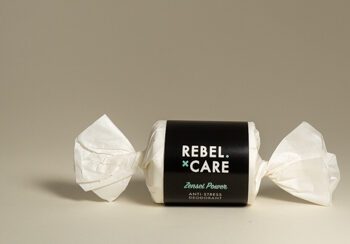
At Rebel.Care, we manufacture refillable deodorants in Amsterdam using bioplastic packaging made from sugarcane. Our refill programme cuts packaging waste by keeping your case in use whilst replacing only what’s needed. It’s natural, it works, and it’s better for the planet. No aluminium, no parabens, no single-use plastic. Just straightforward protection that doesn’t cost the earth.
Frequently Asked Questions
How long does a refillable deodorant case typically last?
A quality refillable deodorant case is designed to last for years with proper care, often 3-5 years or longer. The durable construction means you only need to purchase the case once, then simply replace the inner cartridges as needed. This longevity is what makes refillable systems more cost-effective and environmentally friendly over time compared to buying new single-use containers every few months.
Are refillable deodorant cartridges more expensive than traditional deodorants?
Whilst the initial investment in a refillable case may be slightly higher, refill cartridges are typically priced competitively with traditional deodorants and often cost less per unit. Over time, you'll actually save money because you're only replacing the product, not the entire packaging system. The environmental savings make refillable options significantly better value when you consider the true cost to the planet.
What should I do with my old traditional deodorant containers?
Check with your local recycling facility to see if they accept personal care packaging, though many won't due to mixed materials. If possible, clean out any remaining product residue to improve recyclability of aluminium components. Some brands and retailers offer take-back programmes for hard-to-recycle packaging, so research options in your area or contact the manufacturer directly about responsible disposal.
Will switching to refillable deodorant compromise effectiveness?
Absolutely not. Refillable deodorant systems are about smarter packaging, not weaker formulations. Many refillable options use high-quality, natural ingredients that provide excellent odour protection throughout the day. The delivery mechanism works just as effectively as traditional deodorants, and you'll likely find that natural formulations without aluminium and parabens are gentler on your skin whilst still keeping you fresh.